

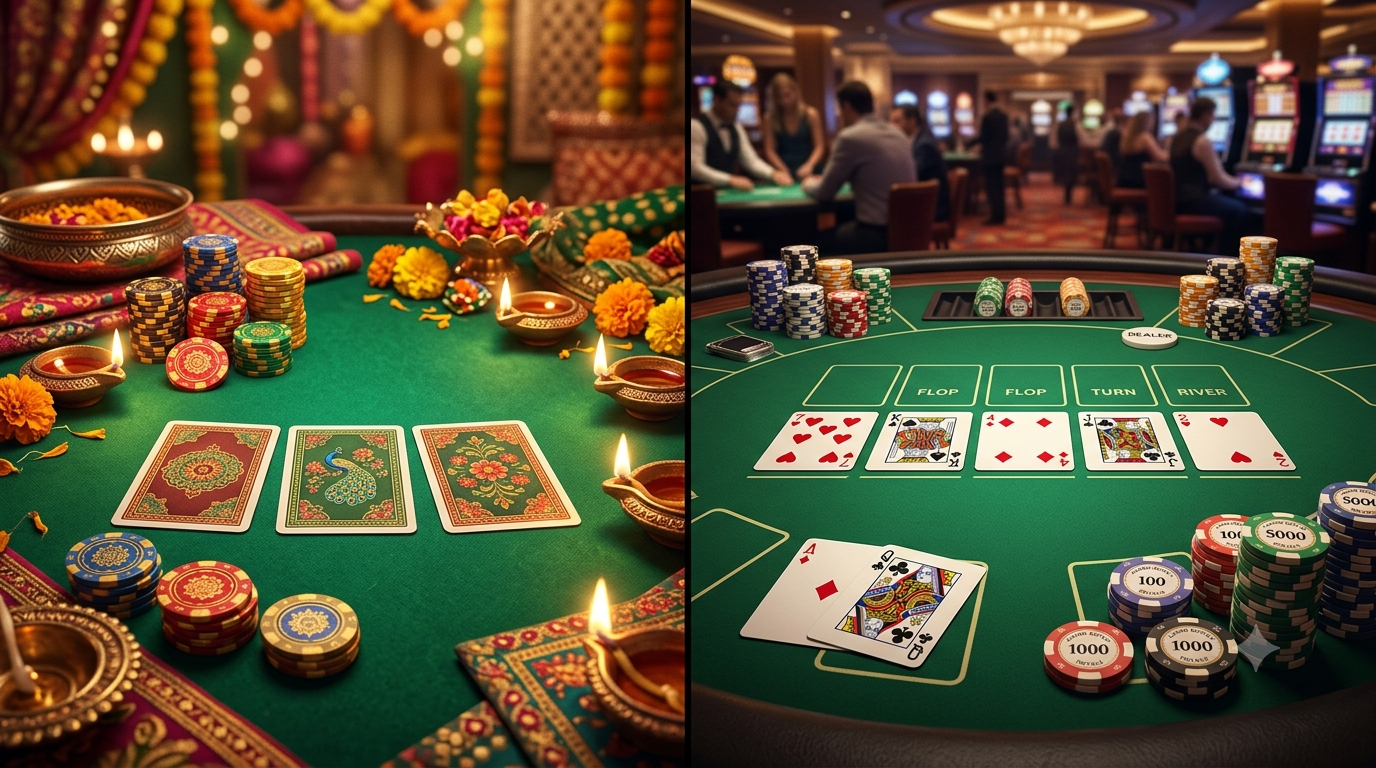
Hey there, fellow card game lover! If you’ve grown up in India, chances are you’ve played (or at least watched) a heated round of Teen Patti during Diwali or family get-togethers. But these days, Poker is also making serious waves, especially among urban players and on online platforms. So, what’s the real deal with Teen Patti vs Poker? Are they basically the same, or worlds apart? Let’s break it down in a fun, straightforward way—no jargon overload, just honest insights from someone who loves both.
A Quick Intro: The Significance of This Comparison in India
Teen Patti (also called 3 Patti or Indian Flush) is our desi pride—a fast, thrilling game rooted in Indian culture, perfect for festive nights in places like Uttar Pradesh, Punjab, Rajasthan, or Mumbai parties. Poker, especially Texas Hold’em, brings that international pro vibe with deeper strategy, tournaments, and growing popularity in Indian metros.
Both use a standard 52-card deck and involve betting and bluffing, but that’s where the similarities start to fade. One feels like a quick sprint with friends; the other is more like a chess match with cards. Whether you’re a casual player looking for fun or someone eyeing real-money games (always play responsibly and check local laws), understanding Teen Patti vs Poker helps you pick what suits your mood.
Core Gameplay: How the Games Actually Play Out
The biggest difference hits right at the start:
- Teen Patti: Each player gets 3 private cards only. No community cards. You place a wager on your three-card hand or engage in wild bluffing. Games are super quick—often 2-5 minutes per hand. Perfect for short bursts during a festive evening or a quick online session.
- Poker (Texas Hold’em): You get 2 hole cards + 5 community cards shared on the table. You build the best 5-card hand. Multiple betting rounds (pre-flop, flop, turn, river) make it slower and more thoughtful—think 20+ minutes for deeper hands.
In short: Teen Patti is all about instant gut feelings; Poker rewards patience and reading the table over time.
Hand Rankings: Similar but Not the Same
Both rank hands from strong to weak, but watch out for these twists:
Teen Patti Hands (highest to lowest):
- Trail (Three of a Kind): three Aces, for example
- Pure Sequence (Straight Flush)
- Sequence (Straight)
- Colour (Flush — same suit)
- Pair
- High Card
Special note for Indians: The highest sequence in Teen Patti is A-2-3, not A-K-Q like in poker. For poker players who are switching over, that’s a classic gotcha!
Poker has 10 standard hand types, with Royal Flush at the top. More combinations mean more ways to outsmart opponents using math and position.
Betting Styles: Blind vs Structured Rounds
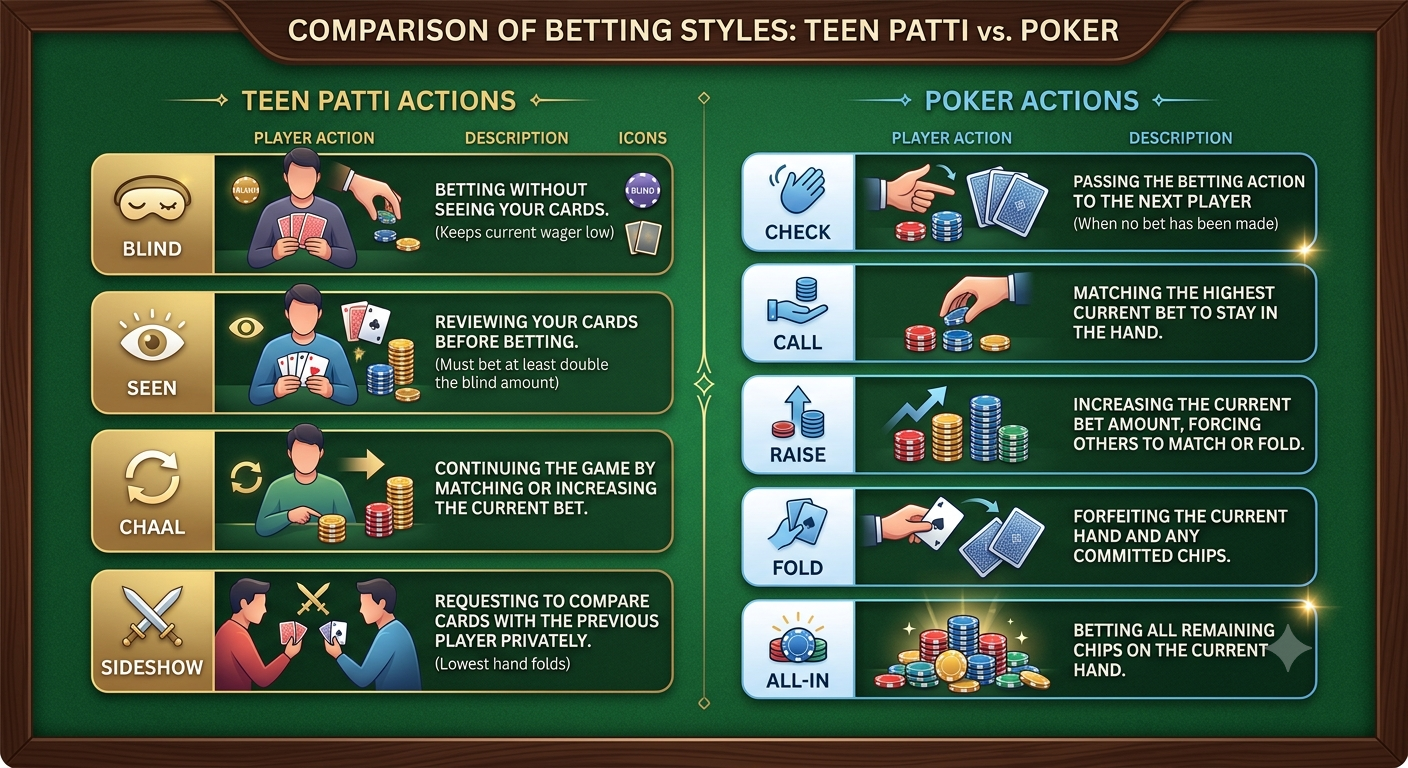
This is where the personality of each game shines:
- Teen Patti: Play blind (without seeing cards—cheaper bets, more thrill) or seen (double the rate after looking). There’s also the fun “sideshow” where you can compare cards privately with the previous player. Betting feels continuous and social.
- Poker: Structured rounds with blinds (forced bets). Options like check, raise, fold, or all-in. Heavy on pot odds, position, and psychological warfare.
While poker allows expert players to grind out edges over multiple hands, teen patti appears riskier and more dependent on luck in the moment.
Skill vs Luck: The Big Debate
- Teen Patti: More luck + instinct + bold bluffs. Great for social fun and quick wins, but variance is high.
- Poker: Heavily skill-based long-term. Pros study probabilities, opponent tendencies, and bankroll management. Many see it as a mind sport.
In India, Teen Patti rules festive chaos and casual apps, while Poker attracts players wanting deeper competition and potential for consistent play on platforms like those offering Texas Hold’em.
Which One Should You Play?
- Choose Teen Patti if: You want fast-paced excitement, love Indian festival vibes, or prefer simple rules for playing with friends/family. It’s perfect for short sessions and high social energy.
- Choose Poker if: You enjoy strategy, long-term improvement, and competing seriously. It’s growing fast in India among younger players who appreciate the global scene.
- Why not both? You can switch between many websites with ease. Start with Teen Patti for confidence, then level up to Poker for the brain workout.
Final Thoughts on Teen Patti vs Poker

At the end of the day, Teen Patti vs Poker isn’t about which is “better”—it’s about what fits your vibe right now. Teen Patti brings that warm, chaotic Indian heart with quick thrills, while Poker offers intellectual depth and worldwide respect. Both build friendships, test your nerves, and deliver those “I can’t believe I just won!” moments.
Next time you’re at a gathering or scrolling for an online game, try both. Who knows—you might become the champ who dominates Diwali tables and online tournaments.
Got a favorite? Drop your thoughts below. Play smart, have fun, and may the cards (and bluffs) be ever in your favor!