

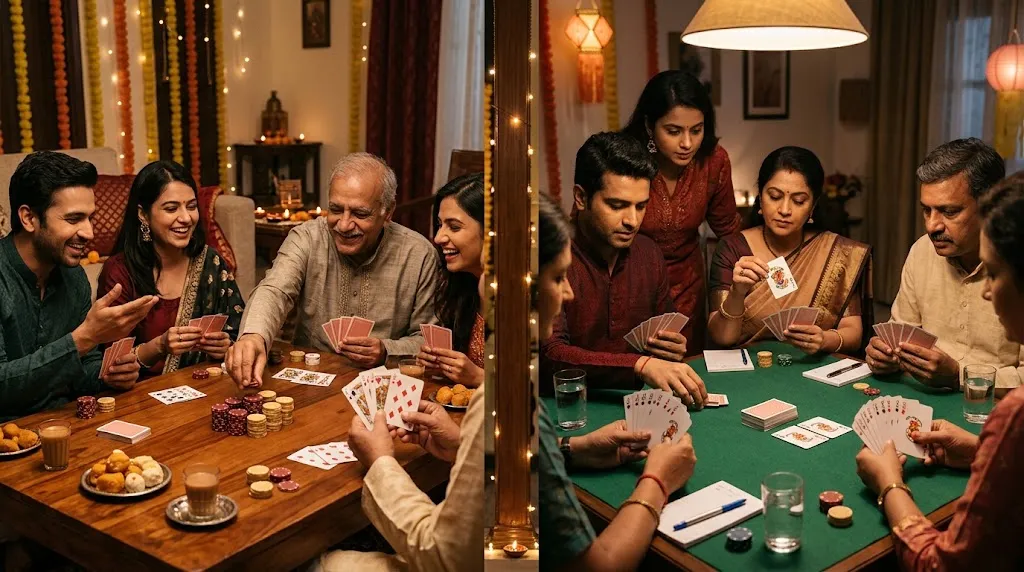
If you have ever sat around a table during Diwali, a family wedding, or a late-night session with friends in India, you already know these two games. One is loud, quick, and full of bluffs. The other is quieter, longer, and all about arranging cards just right. The search for teen patti casino vs rummy keeps growing because players want a clear, practical comparison — not just rules copied from somewhere else.
Here is a fresh look at how Teen Patti and Indian Rummy actually differ, what each feels like to play, and which one might suit you better depending on your mood, time, and style.
Quick Snapshot: Teen Patti vs Rummy
Aspect | Teen Patti | Indian Rummy (13-Card) |
Cards per player | 3 | 13 |
Deck | 1 standard 52-card deck (usually no jokers) | 2 decks + printed/wild jokers |
Main goal | Best 3-card hand or force everyone else to fold | Create legitimate sets and sequences, then declare first |
Typical round length | 1–5 minutes | 5–15 minutes (or longer in Pool) |
Core skill | Reading people, bluffing, timing bets | Memory, probability, card management |
Pace & feel | Fast, social, high energy | Steady, thoughtful, puzzle-like |
Common variants | Classic, Muflis, AK47, Joker | Points, Pool (101/201), Deals |
How Teen Patti Works
Teen Patti (also called 3 Patti or Indian Poker) is simple on the surface. Everyone puts in a small ante (the boot). Each participant is handed three face-down cards. You can play blind (without looking) or seen (after looking at your cards). Betting goes around the table. You can call, raise, or pack (fold).
In order of strength, the hands are ranked as follows:
- Trail (three of a kind)
- Pure Sequence (straight flush)
- Sequence (straight)
- Colour (flush)
- Pair
- High Card
When there is just one person remaining or when two participants attend a performance, the round is over. It is designed for short bursts of excitement. One bold raise or a well-timed fold can decide everything.
This is why Teen Patti feels natural in big groups and festive settings across India. The social element is strong — reading faces, teasing friends, and the sudden silence when someone raises big.
How Indian Rummy Works
Indian Rummy is a completely different rhythm. You receive 13 cards. On every turn you draw one card (from the closed pile or the open discard) and discard one. The aim is to arrange all 13 cards into valid groups before anyone else declares.
You must have:
- At least two sequences
- At least one of those must be a pure sequence (no joker)
Sets (same rank, different suits) and impure sequences (with jokers) fill the rest. When your hand is ready, you declare. Everyone else scores points on their unmatched cards. Face cards and Aces are usually 10 points, number cards face value, jokers zero. Invalid declaration often costs the full 80 points.
Popular formats include:
- Points Rummy — single deal, fast cash or points settlement
- Pool Rummy — 101 or 201 points; cross the limit and you are out
- Deals Rummy — fixed number of deals
Rummy rewards planning. You watch what others pick and discard, protect high-value cards, and decide when to drop early to limit damage.
Skill, Luck, and the Feel of Playing
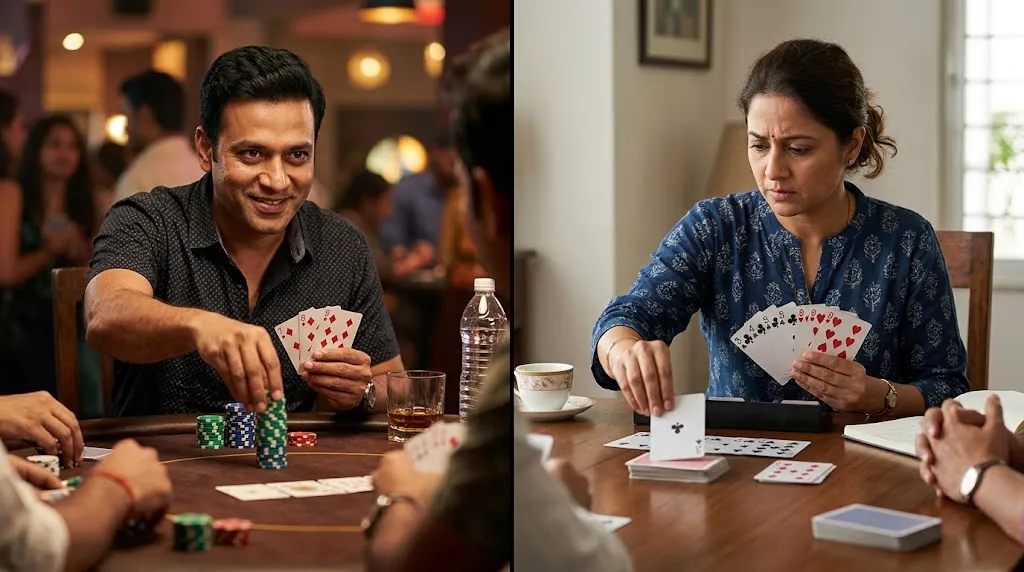
In teen patti casino vs rummy discussions, this is the biggest divide.
Teen Patti leans more on chance and psychology. The three cards you are dealt matter a lot. Bluffing and betting decisions add a skill layer, but variance is high — you can go from winning three pots to losing the next five in minutes.
Rummy is widely regarded as more skill-dominant. Memory of discarded cards, calculating odds of drawing what you need, and managing risk over many turns give consistent players a real edge. Poor starting cards can still be turned around with smart play; bad decisions cost you more than bad luck.
Neither is pure luck or pure skill. At the table, however, the equilibrium seems different.
Popularity and Place in Indian Culture
Both games are deeply Indian. Teen Patti is the classic festival game — Diwali nights, family gatherings in North India, and now online tables that recreate that energy. It travels well to short mobile sessions.
Rummy has a strong presence across the country, especially as a household and competitive skill game. Many players treat it as mental exercise as much as entertainment. Online, both appear on the same apps, so switching between them is common.
Regional preferences exist, but both are national. You will find Teen Patti tables in Delhi living rooms and serious Rummy sessions in Bengaluru or Hyderabad apartments on the same evening.
Which One Should You Choose?
Pick Teen Patti if you want:
- Short, high-energy rounds
- Social banter and bluffing
- Quick decisions and big swings
- Something that feels like a party game
Pick Rummy if you prefer:
- Longer, strategic sessions
- Building something step by step
- Lower variance over time
- A clearer path to improve with practice
Many Indian players enjoy both. Start with Teen Patti when friends are over and the mood is light. Switch to Rummy when you want focused play or a longer session.
Frequently Asked Questions
Is Teen Patti harder or easier than Rummy?
Teen Patti is easier to learn in five minutes. Rummy takes a bit longer to understand pure sequences and point calculation, but the rules are still straightforward.
Can the same people play both games?
Yes. The player count ranges overlap (usually 3–6 for Teen Patti, 2–6 for Rummy), and many apps host both.
Which game is more common in Indian homes?
Both. Teen Patti often appears at festivals and larger gatherings. Rummy is frequent for regular evening play with family or close friends.
Do the games use jokers the same way?
No. Classic Teen Patti usually has no jokers. Rummy relies on printed and wild jokers heavily (except for the pure sequence).
How do sessions feel different online versus offline?
Offline Teen Patti keeps the social energy of the room. Online versions add speed and variety of tables. Rummy online makes tracking discards easier with the interface, while offline relies more on memory and observation.
Final Thoughts
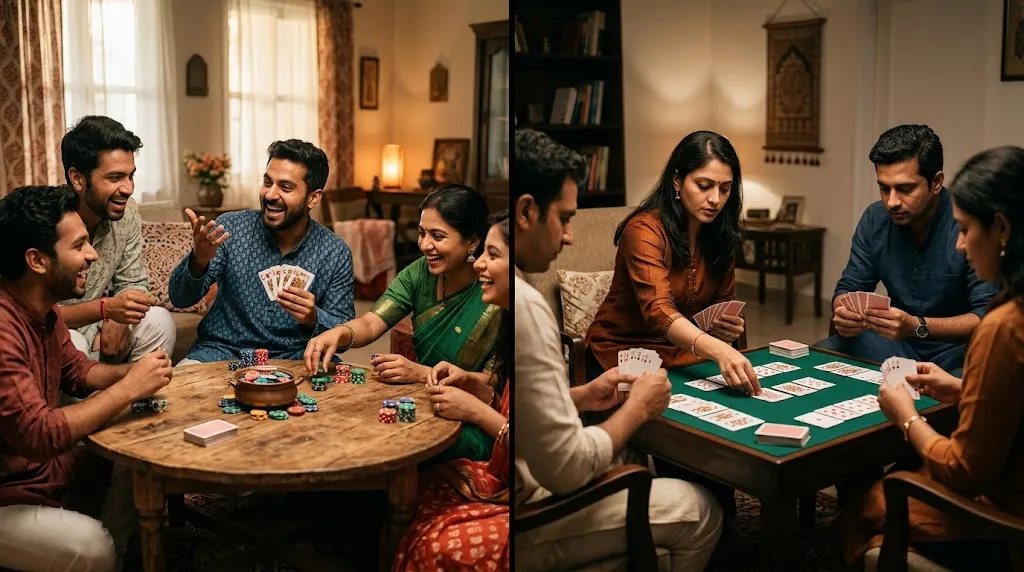
Teen patti casino vs rummy is not really a contest of which game is “better.” They offer two different experiences that happen to use the same 52-card deck. One rewards boldness and reading people. The other rewards patience and pattern recognition.
The next time you open an app or shuffle a physical deck, ask yourself what you feel like doing right now — a quick, lively round or a thoughtful building game. That answer will usually tell you which one to deal.
Play for fun, set limits if stakes are involved, and enjoy the cards the Indian way — with friends, a bit of banter, and the quiet satisfaction of a well-played hand.