

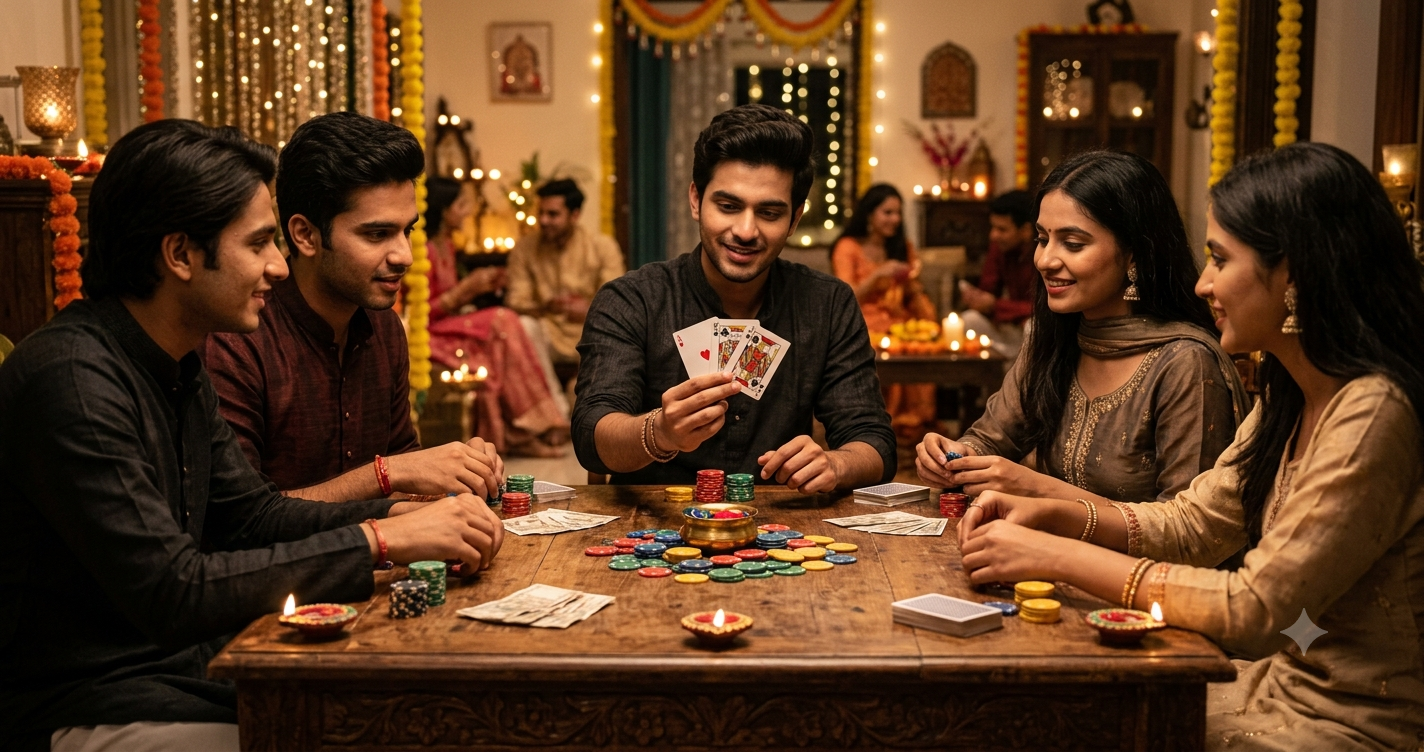
 Hey there! You’ve undoubtedly heard Teen Patti rules in action if you’ve ever sat around with friends or relatives during Diwali, a wedding, or just a weekend get-together in India and wondered what all the stress, laughter, and “Pack!” yells were about. This iconic Indian card game, often called 3 Patti, is a thrilling mix of skill, bluffing, and pure fun that’s been bringing people together for generations.
Whether you’re a total newbie from Delhi, Mumbai, Bangalore, or a small town in Rajasthan, this fresh guide breaks down everything simply. No jargon, no fluff—just clear Teen Patti rules so you can join the table confidently and enjoy the game.
What exactly is Teen Patti?
Teen Patti is a fast-paced, three-card betting game played with a standard 52-card deck (no jokers in the classic version). It’s hugely popular across India, from street-side friendly matches to online platforms and festive parties. The goal? Win the pot (the pile of money or chips in the middle) either by having the best hand or by making everyone else fold and walk away.
It’s similar to poker but simpler and more suited to our desi vibe—quick rounds, big bluffs, and lots of excitement. Perfect for 3 to 7 players, though 4-6 feels ideal.
Basic Setup: Getting Ready to Play
- Choose a Dealer: Usually, everyone draws a card, and the highest one becomes the dealer. Every round, the dealer function is rotated clockwise.
- The Boot (Ante): Everyone puts in a small agreed amount into the pot before cards are dealt. This is the starting stake—keeps things interesting without breaking the bank early on.
- Deal the Cards: The dealer gives three cards face-down to each player, one at a time, going clockwise.
That’s it for setup. Now the real fun begins!
Core Teen Patti Rules: How the Game Flows
Once cards are dealt, play starts with the person to the left of the dealer and moves clockwise. Here’s the heart of Teen Patti rules:
Blind or Seen?
- On your turn, you decide:
- Blind: It’s exhilarating and hazardous to wager without glancing at your cards, but it displays confidence.
- Seen (Chaal): Look at your cards first. You must bet more (usually double the blind stake).
- You can switch from blind to seen later, but once seen, you stay seen.
- Your Options Each Turn:
- Chaal (Call/Continue): Match the current bet to stay in.
- Raise: Increase the bet to pressure others.
- Pack (Fold): Quit the round and lose your stake so far.
Betting continues until only one player remains (they win the pot automatically) or two players are left.
The Showdown: Deciding the Winner
One may request a show when there are just two players remaining. Both reveal cards, and the best hand wins. (In some friendly games or apps, there are side shows or variations on when a show is allowed.)
Pro tip for beginners: Don’t rush to show unless you’re confident—bluffing is a big part of the game’s charm!
Teen Patti Hand Rankings (From Strongest to Weakest)

Memorize these Teen Patti rules for hands—they’re your roadmap to winning:
- Trail (Trio / Set): Three cards of the same rank. A-A-A is the best; 2-2-2 is the weakest.
- Pure Sequence (Straight Flush): A-K-Q of hearts or 4-5-6 of spades are examples of three successive cards of the same suit. Ace can be high or low in many versions.
- Sequence (Run / Straight): Three consecutive cards, not all the same suit (e.g., 10-J-Q mixed suits).
- Color (Flush): Not in order, three cards of the same suit.
- Pair: Two cards of the same rank + one unrelated card.
- High Card: Nothing special—the highest single card wins ties by comparing the next highest, then the last.
Important Note: In case of ties within the same hand type, the highest ranks win (Ace high). House rules on suits or exact sequences can vary slightly—always confirm before starting!
Betting Nuances Every Beginner Should Know
- Blind Players: Usually bet 1x to 2x the current stake.
- Seen Players: Bet at least 2x (often up to 4x) the stake.
- Stakes can grow quickly with raises, so set limits with friends to keep it fun and responsible.
This blind-vs-seen twist is what makes Teen Patti rules unique and addictive compared to regular poker.
Popular Variations Across India
Once you master the basics, try these fun twists common in Indian circles:
- Joker Teen Patti: Wild cards add unpredictability.
- AK47: The jokers are A, K, 4, and 7.
- Muflis: Hand rankings reversed—lowest hand wins!
- Best of Four: Deal four cards, then select the top three.
These keep the game fresh during long festival nights.
Beginner Tips for Playing Smart in India
- Start small with the boot amount—especially with family or friends.
- Watch others: Bluffing works best when you read the table.
- Don’t chase bad hands—packing early saves money for better rounds.
- Practice online on trusted Indian apps (where skill-based games are popular) before playing for stakes.
- Remember: It’s about enjoyment. Play responsibly—Teen Patti is entertainment, not a way to get rich quick.
In places like Uttar Pradesh, Punjab, Gujarat, or Maharashtra, you’ll find local flavors and house rules. Always prioritize fun and fair play.
Ready to Shuffle and Deal?

Now you know the Teen Patti rules inside out. Grab a deck, call your buddies, and dive in. Whether it’s a casual home game in Kolkata or an online session from Hyderabad, you’ll feel right at home.
Have questions about a specific rule or variation? Drop them in the comments—I’d love to help more beginners fall in love with this classic Indian game.
Play safe, play smart, and may the best bluff win!